

Offline Mode
Your inspections don't stop, even if the internet does.





PropertyLenz Blog
How to Handle Tenant Abandonment: The Step-by-Step Inspection Checklist (Before Legal Trouble Finds You)
Let's talk about one of Riley's worst Tuesday mornings.
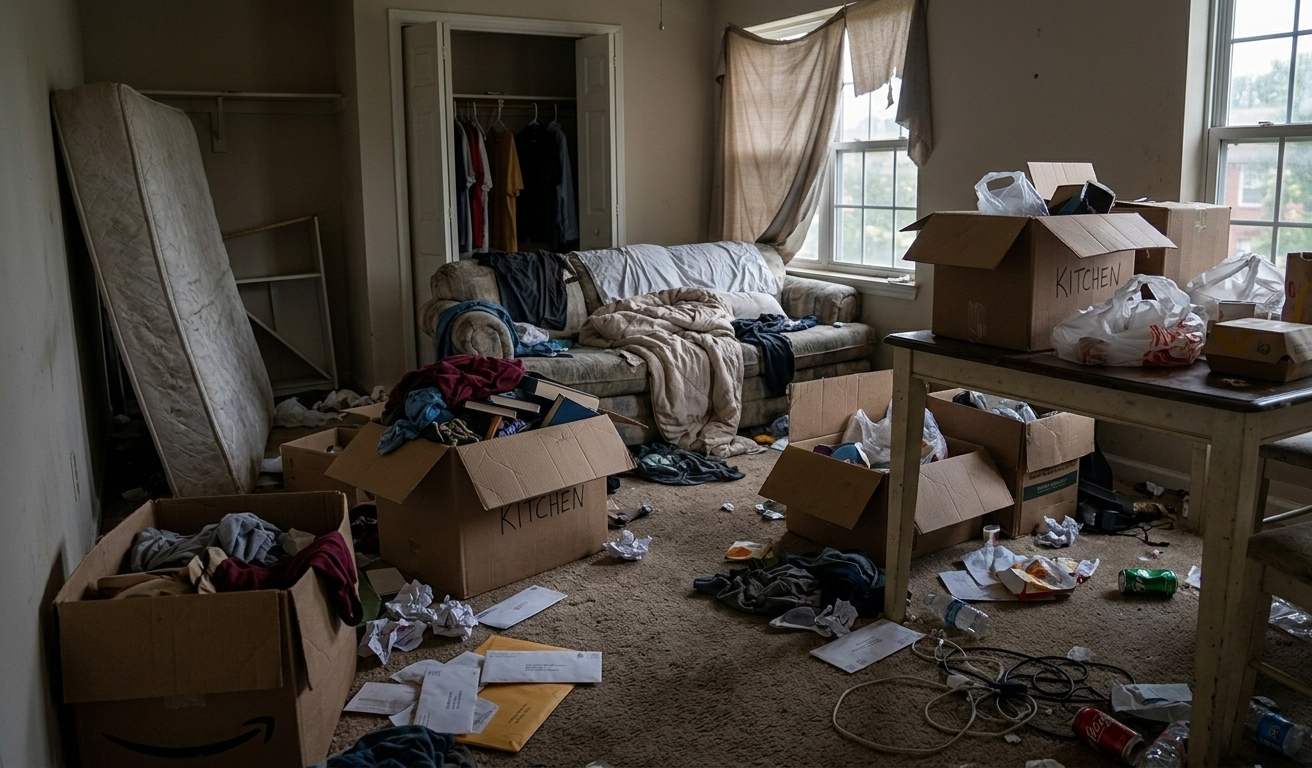
He showed up for what he thought would be a routine inspection. The tenant hadn't responded to calls for three weeks, mail was piling up, and neighbors reported the place looked empty. Classic tenant abandonment red flags.
Riley unlocked the door expecting the usual mess, maybe some forgotten furniture, a few boxes, the standard "I left in a hurry" situation.
Instead, he walked into a bedroom that smelled like a commercial kennel had exploded. The carpet was destroyed. The walls had scratches at dog-height. And based on the staining pattern, this room had been used as a full-time bathroom for what Riley guessed was "at least two large dogs, possibly three."
The tenant? Vanished. No forwarding address. No explanation. Just a $4,500 repair bill and a security deposit that covered maybe 30% of it.
Here's what Riley learned: When you discover tenant abandonment, your first hour determines whether you'll recover costs or eat them.
Why Tenant Abandonment Requires Immediate Action

When a tenant disappears without notice, the clock starts ticking on multiple fronts.
Legally, you need clear documentation proving abandonment before you can reclaim the property. Walk in without proper evidence, and you could face wrongful eviction claims, even if the place has been empty for weeks.
Financially, every day without documentation is a day you can't justify withholding security deposits or pursuing additional damages. That rental property inspection report becomes your entire defense in a security deposit dispute.
Practically, properties don't improve with time. Water damage spreads. Pest problems escalate. What starts as a minor issue on Day 1 becomes a major renovation by Day 30.
We built our inspection system around these three realities. Because when you're standing in an abandoned property trying to figure out your next move, you don't need theory, you need a checklist.
The Step-by-Step Tenant Abandonment Inspection Protocol
Step 1: Establish Legal Abandonment (Before You Touch Anything)
Before you start documenting damage, you need documentation of abandonment itself.
Photograph the exterior first:
- Mail overflowing from the mailbox
- Utilities that appear disconnected
- Overgrown landscaping
- Missing vehicles that were previously present
Document communication attempts:
- Screenshot unanswered calls and texts
- Save returned mail marked "return to sender"
- Note dates and methods of contact attempts
Check for signs of occupancy:
- Look for recent utility usage (if you have access to that data)
- Talk to neighbors about when they last saw the tenant
- Note whether perishable food in the fridge is fresh or expired
This isn't paranoia, it's protection. One landlord we know skipped this step, started repairs immediately, and faced a lawsuit when the tenant claimed they were "just on vacation." The tenant lost eventually, but the legal fees cost more than the repairs.
Step 2: The Room-by-Room Move Out Inspection Checklist

Now you can start the actual inspection. Work systematically through every room using a standardized checklist.
Living Areas:
- Walls: holes, scratches, stains beyond normal wear
- Floors: damaged carpet, scratched hardwood, stained tile
- Windows: cracked glass, broken blinds, damaged frames
- Doors: damaged frames, broken locks, missing hardware
- Light fixtures: missing bulbs, damaged fixtures, broken switches
Kitchen:
- Appliances: function test every item, check for damage
- Countertops: burns, deep scratches, missing tiles
- Cabinets: broken hinges, water damage, missing doors
- Sink and plumbing: leaks, clogs, damaged fixtures
- Flooring: stains, water damage, loose tiles
Bathrooms:
- Fixtures: cracks, chips, missing parts
- Plumbing: test everything, check for leaks
- Ventilation: ensure exhaust fans work
- Walls and floors: water damage, mold, broken tiles
- Medicine cabinets and mirrors: damage or removal
Bedrooms:
- Carpets: stains, burns, tears (yes, especially pet bathroom situations)
- Closets: damaged doors, missing hardware, unauthorized modifications
- Windows: broken locks, damaged screens
- Walls: check behind where furniture was positioned
Utility Areas:
- HVAC: filter condition, signs of neglect, unusual damage
- Water heater: leaks, corrosion, tampering
- Washer/dryer hookups: proper condition, no damage
- Garage/storage: unauthorized modifications, damage, debris
The key is comparing everything to your move-in inspection report. What changed? What's missing? What's damaged beyond normal use?
Step 3: Photograph Everything (And We Mean Everything)
Your photos need to tell a story that holds up in court or a security deposit dispute.
Wide shots first:
- Capture the overall condition of each room
- Show context for specific damage
- Document the general cleanliness level
Then close-ups:
- Every damaged area from multiple angles
- Anything that might be questioned later
- Serial numbers on appliances that don't match originals
Pro tip: Put a ruler or measuring tape next to damage. "Large hole" is subjective. "8-inch hole in drywall" is evidence.
Include timestamps on photos if your camera allows it. Better yet, use an app that automatically geotags and timestamps every image: which brings us to how PropertyLenz handles this.
Step 4: Document Smells and Non-Visual Damage
Here's what photos can't capture: that kennel-bedroom smell Riley walked into.
Note in writing:
- Unusual or strong odors (pet urine, smoke, mold, chemical)
- Missing items that should be present per lease
- Signs of unauthorized occupants or pets
- Evidence of illegal activity (if present)
This written documentation supplements your photos and creates a complete picture of the property condition. In security deposit disputes, judges want to know about habitability issues: and smells absolutely qualify.
Step 5: Test All Systems and Safety Features

Abandoned properties often reveal neglected maintenance that tenants hid while occupying the space.
Test everything:
- All light switches and outlets
- Smoke detectors and carbon monoxide alarms
- Plumbing (run water, flush toilets, check for leaks)
- HVAC system (turn it on, listen for unusual noises)
- Garage door openers
- Security system (if applicable)
- All locks and keys
Document what works, what doesn't, and what appears to have been deliberately disabled or damaged.
Step 6: Create the Official Rental Property Inspection Report
Now compile everything into a formal report that includes:
- Date and time of inspection
- List of people present during inspection
- Photos organized by room
- Written descriptions of all damage
- Estimated repair costs (get contractor quotes quickly)
- Comparison to move-in condition
- List of items left behind by tenant
This document becomes your evidence for withholding security deposits and pursuing additional damages if necessary.
How PropertyLenz Turns This Process From Painful to Powerful
We built PropertyLenz's inspection features specifically for situations like Riley's kennel-bedroom disaster.
On-site documentation:
- Take photos directly in the app with automatic geotagging and timestamps
- Add notes to specific photos while you're looking at the damage
- Use voice-to-text for faster documentation when you're walking through
Organized reporting:
- Pre-built checklists ensure you don't miss critical items
- Side-by-side comparison with move-in photos
- Professional PDF reports generated automatically
- Cloud storage keeps everything accessible for years
Legal protection:
- Digital signatures for tenant acknowledgment (when you can get it)
- Date-stamped evidence that holds up in court
- Complete audit trail of property condition over time
Works everywhere:
- Offline mode means you can document even when cell service is spotty
- Syncs automatically when you're back online
- Access reports from anywhere via the portal
Riley now does every inspection through PropertyLenz. When his next abandonment situation happened (a tenant who left suddenly after a job loss), he had a complete, court-ready inspection report finished before he even left the property.
The security deposit dispute never made it to court. His documentation was so thorough that the tenant's attorney advised settling immediately.
Don't Wing It When Thousands of Dollars Are on the Line
Tenant abandonment inspections aren't the time to improvise. You need a systematic move out inspection checklist that covers every detail, creates defensible documentation, and protects you legally.
Download our 2026 Bulletproof Inspection Protocol to get the complete checklist we use for every abandonment situation. It includes room-by-room guidance, documentation requirements, and red flags that indicate bigger problems.
Or better yet, try PropertyLenz and conduct your next inspection with tools designed specifically for this process. Your future self (and your lawyer, if it comes to that) will thank you.
Because the difference between eating a $4,500 repair bill and recovering your costs isn't luck: it's documentation. And documentation starts with knowing exactly what to look for, photograph, and record the moment you walk through that door.
Recent Blogs
The Ultimate Guide to the Rental Condition Report: Everything You Need to Succeed
Published: April 29, 2026
Read More
How to Create a Pro-Level Rental Inspection Checklist in Under 5 Minutes
Published: April 27, 2026
Read More
Move-In vs. Move-Out Inspection: How to Create a Comparison Report That Ends Disputes
Published: April 24, 2026
Read More
Deposit Dispute Secrets Revealed: How Your Rental Condition Report Can Save You Thousands
Published: April 22, 2026
Read More