

Offline Mode
Your inspections don't stop, even if the internet does.





PropertyLenz Blog
New Photo-Proof Laws Are Here: Is Your Rental Condition Report Up To Snuff?
If you’ve been managing property for more than a few years, you know the drill. A tenant moves out, you find a massive wine stain on the carpet or a hole in the drywall, and you deduct the repair cost from the security deposit. Traditionally, a quick "before" photo and a "after" photo were enough to keep everyone honest.
But it’s 2026, and the legal landscape has shifted significantly. Over the last year, states like California and Washington have introduced strict new requirements for how landlords document property conditions. It’s no longer just about having a photo; it’s about when that photo was taken, what it shows, and how it’s stored.
If your rental condition report isn’t backed by high-integrity digital evidence, you might find yourself losing deposit disputes by default: even if the damage is obvious. Let’s break down what these new laws mean for you and how you can protect your business.
California’s AB 2801: The "Phased" Documentation Era
California has long been a trendsetter in tenant-landlord law, and AB 2801 is one of the most specific pieces of legislation we’ve seen regarding security deposits. As of 2025, the state moved to a phased approach for photo documentation. This isn't just a suggestion; it’s a legal requirement to justify deductions.
Under these rules, you can’t just show a picture of a clean room from three years ago and a dirty one today. You now need three distinct sets of photos:
- Before-Occupancy Photos: Taken immediately before the new tenant moves in to establish the baseline condition.
- Before-Work Photos: Taken immediately after the tenant vacates but before any cleaning or repairs begin. This proves the damage was actually left by the tenant.
- After-Work Photos: Documentation showing the same items after they’ve been fixed or cleaned.
If you plan to charge a tenant for a dirty oven, the law expects to see a photo of the dirty oven next to a photo of the cleaned oven. Without this "side-by-side" proof, your claim to that portion of the security deposit could be thrown out in small claims court.
Washington State: The Checklist Gatekeeper
In Washington, the requirements are equally firm but focus heavily on the initial checklist. Landlords are legally barred from collecting a security deposit unless they provide a written checklist documenting the unit’s condition at the start of the lease.
While photos aren't strictly mandated for every single item in Washington yet, they have become the de facto standard for a "legally sound" checklist. If a tenant disputes a charge, and you have a written note saying "floors are clean" but the tenant has a photo showing a small scratch you missed, the tenant's visual evidence will almost always win over your written word.
Why Your Smartphone Gallery is a Liability
We talk to a lot of landlords who think they’re covered because they have 400 photos of their units sitting in their iPhone’s "Recents" folder. In 2026, that’s a risky gamble.
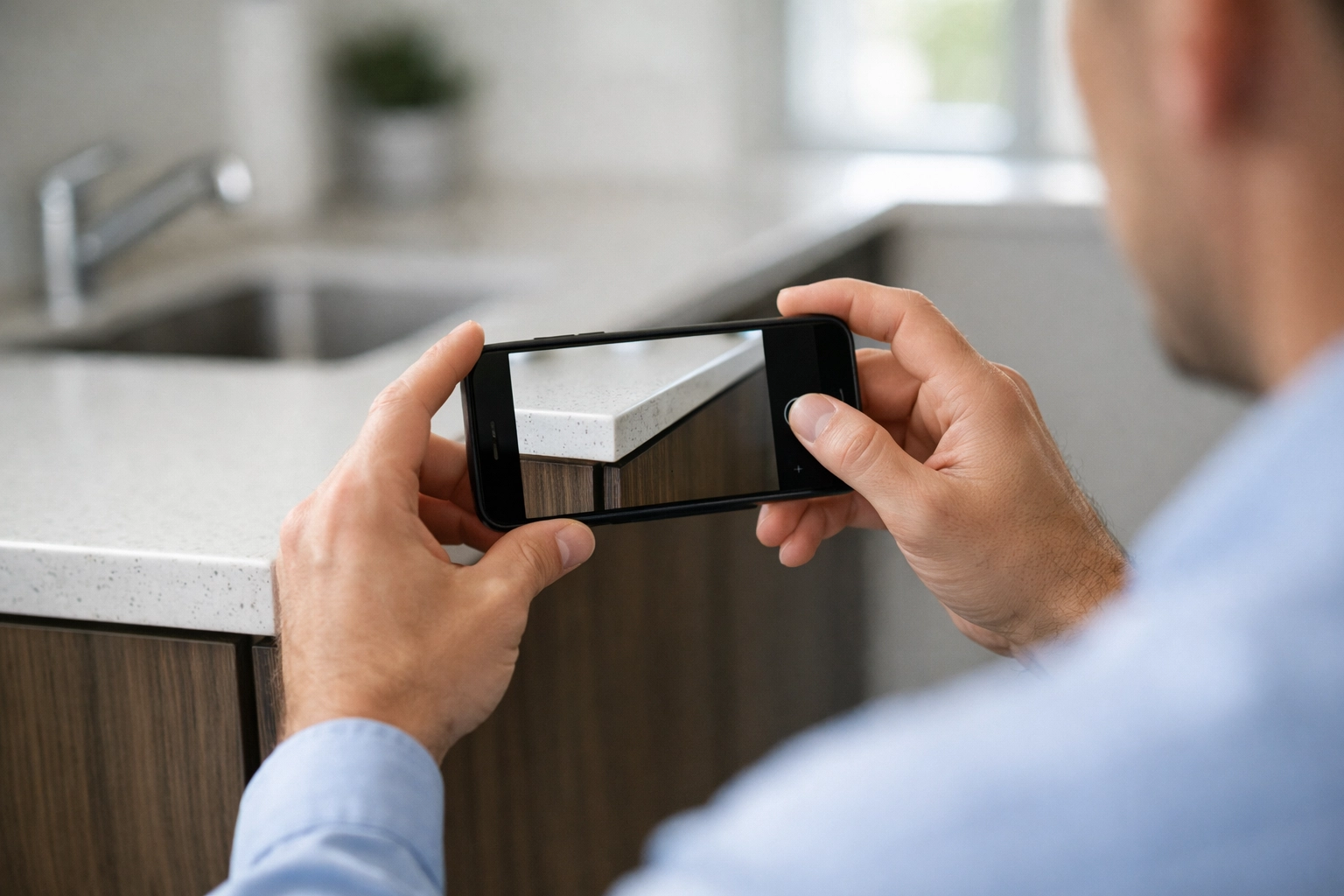
The problem with standard smartphone photos is the lack of verified "chain of custody." A savvy tenant (or their lawyer) can argue that a photo was taken months before they moved in or that it was edited to hide pre-existing wear and tear. Sounds crazy we know…but people go to great lengths to win an argument…and get some cash.
To make a report truly solid, you need data that proves the photo is authentic. This includes:
- Time-Stamps: Proving exactly when the photo was taken (critical for meeting California’s "immediately after vacating" rule).
- Geo-Tagging: Using GPS data to prove the photo was actually taken at the rental property and not a different unit.
- Cloud Integrity: Storing photos in a way that proves they haven't been altered or "Photoshopped" after the fact.
This is where property inspection software becomes a necessity rather than a luxury. When you use a dedicated app like PropertyLenz, every photo you snap is automatically embedded with this metadata, creating a digital paper trail that is very hard to argue with in court.
The "Before-Occupancy" Trap
The biggest mistake we see landlords make is rushing the move-in inspection. You’re excited to get the new tenant in, they’re excited to move their boxes, and you do a "quick walk-through" together.
In the eyes of the law, a rushed move-in report is a gift to the tenant at move-out time. If you didn’t document the exact condition of the baseboards, the inside of the dishwasher, or the seals on the windows on day one, you effectively waive your right to charge for those items later.
Using a structured system ensures you don't miss these "hidden" areas. With the right inspection forms, you are prompted to check and photograph specific zones, ensuring your baseline is complete.
Moving Beyond "Normal Wear and Tear"
One of the most common points of friction is the definition of "normal wear and tear." New laws are becoming stricter about what qualifies as damage. For instance, California’s AB 2801 explicitly prohibits "automatic" or fixed cleaning charges in leases. You can’t just charge a flat $300 cleaning fee anymore; you have to prove the cleaning was "reasonably necessary" to restore the property to its original state.
High-resolution photos are the only way to distinguish between a carpet that is "a little old" (wear and tear) and a carpet that has "permanent pet stains" (damage). By using data visualizations and side-by-side reporting, you can show a clear decline in condition that justifies a deduction.
How PropertyLenz Simplifies Compliance
We built PropertyLenz specifically for the landlord who wants to stay lean and avoid the "clunky" feel of enterprise software. Our goal is to make these new legal requirements feel like a natural part of your workflow, not a mountain of extra paperwork.
- Geo-Fencing: Our geo-fencing feature ensures that inspections are actually performed on-site, providing that extra layer of legal proof that you were physically present at the property.
- Digital Signatures: Getting a tenant to sign off on the condition report instantly via digital signatures creates a mutual agreement that is much harder for them to walk back later.
- Offline Mode: We know that rental units: especially basements or high-rises: don't always have the best Wi-Fi. Our offline mode lets you finish the job without losing data.
- Instant Access: Once an inspection is done, it's stored safely in the cloud. You can view or download the report anytime, whether it's two weeks or two years later.
The Bottom Line: Transparency Wins
Ultimately, these new photo-proof laws aren't just about catching "bad" tenants; they’re about creating a transparent system for everyone. When a tenant knows you have a high-integrity, time-stamped, and geo-tagged report of every corner of the house, they are much more likely to take care of the property.
And if things do go wrong, you won't have to spend your weekend digging through old emails or arguing in a courtroom. You'll have a professional, organized report ready to go.
If you’re still using paper checklists or just "winging it" with your phone’s camera, it might be time to upgrade. You can check out our time-saving calculator to see how much a digital workflow could save you, or dive into our case studies to see how other landlords are handling the transition.
Don't wait for a $2,000 security deposit dispute to realize your reports aren't up to code. Start building your digital defense today.
Recent Blogs
The Ultimate Guide to the Rental Condition Report: Everything You Need to Succeed
Published: April 29, 2026
Read More
How to Create a Pro-Level Rental Inspection Checklist in Under 5 Minutes
Published: April 27, 2026
Read More
Move-In vs. Move-Out Inspection: How to Create a Comparison Report That Ends Disputes
Published: April 24, 2026
Read More
Deposit Dispute Secrets Revealed: How Your Rental Condition Report Can Save You Thousands
Published: April 22, 2026
Read More