

Offline Mode
Your inspections don't stop, even if the internet does.





PropertyLenz Blog
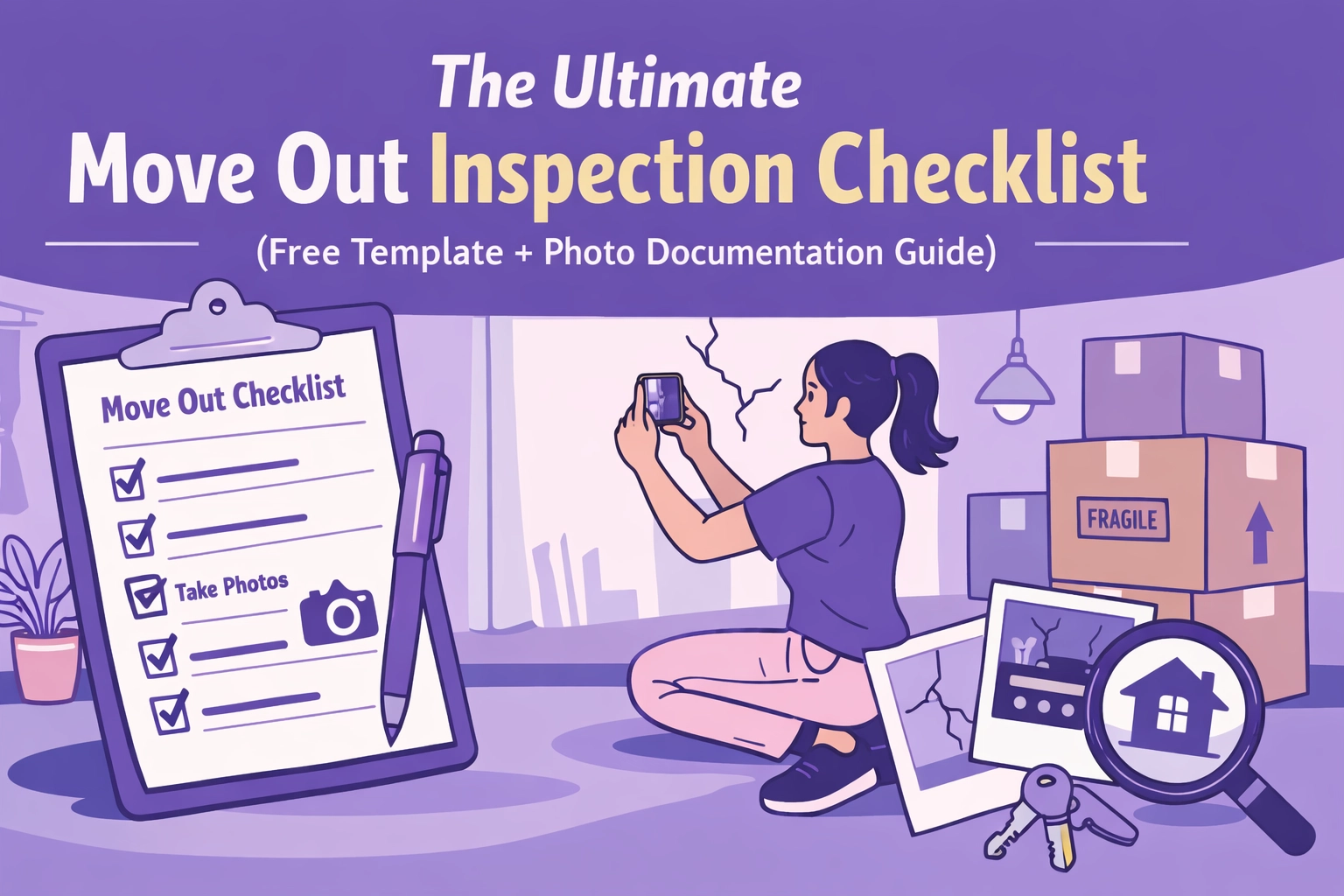
The Ultimate Move Out Inspection Checklist (Free Template + Photo Documentation Guide)
Let's be honest: move-out inspections are nobody's idea of a good time. You are walking through empty rooms with a clipboard, trying to remember what that wall looked like six months ago, and wondering if that mysterious stain on the carpet counts as "normal wear and tear" or "definite security deposit deduction."
The average move-out inspection takes about 2.5 hours when you factor in documentation, photo-taking, and note-scribbling. And if you miss something? You are potentially leaving money on the table or, worse, facing a dispute with a former tenant who swears the scratched countertop was already there.
We created this comprehensive move-out inspection checklist to help you document everything systematically, protect your security deposits, and slash your inspection time down to about 20 minutes. Yes, really.
Why Move-Out Inspections Are Non-Negotiable
A move-out inspection is your official record of a rental property's condition when a tenant vacates. This document serves three critical purposes:
Legal protection: It provides documented evidence if deposit disputes escalate to small claims court.
Financial clarity: It identifies damage beyond normal wear and tear, justifying any security deposit deductions.
Property maintenance: It gives you a clear roadmap of repairs needed before the next tenant moves in.
The key is conducting this inspection methodically and documenting everything with photos. A rushed or incomplete inspection often leads to "he said, she said" situations that nobody wins.

The Room-by-Room Move-Out Inspection Checklist
The most effective way to conduct a move-out inspection is systematically moving through each space. Here is your complete checklist:
Entryways and Corridors
- Doors: Check for scratches, dents, proper closing mechanism, and lock functionality
- Door frames: Inspect for chips, cracks, or paint damage
- Floors: Document stains, scratches, loose tiles, or carpet damage
- Walls: Note holes, scuff marks, or discoloration beyond normal wear
- Light fixtures: Test functionality and check for missing bulbs or covers
- Smoke detectors: Verify they are present and functional
Living Room and Common Areas
- Flooring: Carpet stains, hardwood scratches, tile cracks
- Walls: Nail holes, paint damage, marks from furniture
- Windows: Cracks, broken seals, damaged screens, cleanliness
- Window treatments: Missing or damaged blinds, curtain rods
- Baseboards: Chips, water damage, separation from wall
- Ceiling: Water stains, cracks, popcorn texture damage
- Electrical outlets and switches: All functional and properly covered
Kitchen
- Appliances: Functionality of stove, oven, refrigerator, dishwasher, microwave
- Cabinets: Doors align properly, handles intact, interior cleanliness
- Countertops: Stains, burns, chips, or cracks
- Sink and faucet: Leaks, drainage issues, physical damage
- Floors: Particularly around appliances for water damage
- Backsplash: Cracked or missing tiles, grout condition
- Exhaust fan: Functionality and cleanliness

Bathrooms
- Toilet: Functionality, cracks, cleanliness, secure mounting
- Sink and vanity: Leaks, cracks, missing caulking, cabinet condition
- Shower/tub: Cracks, missing grout, water damage, clogged drains
- Tile and grout: Damaged or missing tiles, mold or mildew
- Mirrors and medicine cabinets: Cracks, proper mounting
- Exhaust fan: Functionality (critical for mold prevention)
- Floors: Water damage, loose tiles, worn linoleum
Bedrooms
- Closets: Functionality of doors, condition of rods and shelving
- Floors: Same criteria as living areas
- Walls: Nail holes from wall-mounted items, paint condition
- Windows: Functionality and condition
- Doors: Proper closing, lock functionality, surface damage
- Light fixtures and ceiling fans: Functionality, missing parts
Exterior and Additional Areas
- HVAC systems: Condition of filters, functionality
- Water heater: Leaks, proper functioning
- Garage or parking area: Stains, damage to walls or doors
- Yard and landscaping: Condition relative to lease agreement
- Fences and gates: Damage, proper functionality
Documentation Abbreviation System
To speed up your inspection, use these standardized abbreviations in your notes:
- G = Good/Satisfactory condition
- NC = Needs Cleaning
- NP = Needs Painting
- NR = Needs Repair
- SC = Scratched or Damaged
- RP = Needs Replacing
This shorthand keeps your documentation consistent and speeds up the process significantly.

The Photo Documentation Strategy
Here is where most landlords waste time or create problems for themselves. You need photos, but you do not need 500 of them.
Essential photos to capture:
- Wide-angle room shots: One photo showing the overall condition of each room
- Damage close-ups: Detailed photos of any damage, scratches, or stains
- Appliance condition: Inside and outside of major appliances
- Problem areas: Any area that might be disputed (pre-existing damage noted on move-in)
- Meter readings: Utility meters to establish final readings
Pro tip: Take photos in good lighting, and include a reference object (like a quarter) next to small damage to show scale. Time-stamped photos are your best friend in deposit disputes.
The challenge? Organizing these photos, matching them to specific rooms, and attaching them to your inspection report. This is where most landlords spend an extra hour just sorting files.
Normal Wear and Tear vs. Damage (The $500 Question)
This distinction is critical because you cannot legally deduct normal wear and tear from security deposits. Here is how to tell the difference:
Normal wear and tear includes:
- Faded paint or wallpaper
- Minor carpet wear in traffic areas
- Small nail holes from picture hanging
- Dirty grout that can be cleaned
- Minor scuffs on walls
- Worn cabinet hinges from regular use
Damage that justifies deductions:
- Large holes in walls requiring patching
- Carpet stains or burns
- Broken appliances or fixtures
- Cracked tiles or countertops
- Pet damage beyond normal use
- Missing items (light fixtures, cabinet hardware)
When in doubt, ask yourself: "Would this happen naturally over the lease period with reasonable use?" If yes, it is probably normal wear and tear.

How PropertyLenz Transforms This 2.5-Hour Process Into 20 Minutes
We built PropertyLenz specifically to solve this time-drain problem. Here is how our inspection features streamline the entire move-out process:
Custom digital checklists: Pre-built templates for move-out inspections that you can customize for your specific properties. No more clipboard and paper.
Integrated photo documentation: Take photos directly in the app, and they automatically attach to the specific room and item you are inspecting. No more sorting through 200 unnamed phone photos later.
Offline mode: Conduct inspections even in properties with poor cell service. Everything syncs when you are back online.
Digital signatures: Get tenant sign-off immediately on the inspection report using our digital signature feature. No need to schedule another meeting.
Cloud storage: All inspection reports and photos are automatically stored and organized by property. Access them instantly if disputes arise months later.
Side-by-side comparison: Pull up the move-in inspection report alongside the move-out report to compare conditions accurately.
The result? Our users report reducing inspection time from 2.5 hours down to 20 minutes on average. That is time you can spend on higher-value activities, like marketing your vacancy or screening new tenants.
Conducting the Inspection: Best Practices
Schedule with the tenant present: Whenever possible, walk through together. This transparency reduces disputes and allows immediate clarification on any damage.
Bring your move-in report: You need a baseline for comparison. If that mysterious stain was already documented at move-in, you cannot deduct for it now.
Be thorough but fair: Document everything, but remember the wear and tear distinction. Your reputation depends on being reasonable.
Provide copies immediately: Give the tenant a copy of the inspection report and photos before they leave. This prevents "surprise" deductions later. PropertyLenz lets you send a completed pdf instantly once the inspection is complete.
Set clear timelines: Communicate when they will receive their deposit return and itemized deductions (follow your state's legal requirements).

Your Free Move-Out Inspection Template
We believe every landlord deserves professional tools, which is why we offer a comprehensive inspection form template you can download and start using today.
For landlords managing multiple properties, our mobile app takes this template and makes it interactive, cloud-synced, and photo-integrated. You can explore all our features designed specifically for efficient property management at PropertyLenz Features.
The Bottom Line
Move-out inspections do not need to be the dreaded, time-consuming task they have traditionally been. With a systematic checklist, proper photo documentation, and the right tools, you can protect your investment, maintain fair tenant relationships, and reclaim hours of your time.
Whether you use our free template with a clipboard or upgrade to our digital platform, the key is consistency. Document every move-out the same way, every time, and you will have a defensible record that protects you legally and financially.
Ready to see how much time you could save? Check out our time-saving calculator to calculate your specific time savings, or explore how PropertyLenz can transform your entire inspection workflow at propertylenzapp.com.
Recent Blogs
The Ultimate Guide to the Rental Condition Report: Everything You Need to Succeed
Published: April 29, 2026
Read More
How to Create a Pro-Level Rental Inspection Checklist in Under 5 Minutes
Published: April 27, 2026
Read More
Move-In vs. Move-Out Inspection: How to Create a Comparison Report That Ends Disputes
Published: April 24, 2026
Read More
Deposit Dispute Secrets Revealed: How Your Rental Condition Report Can Save You Thousands
Published: April 22, 2026
Read More